
Taiwan is a food-lover’s paradise, and in late May two of
its greatest seasonal specialties make their appearance, shu mei (berries) and
Yu-he-bao lychees.
Shu mei are the lesser known of the two. The name means
literally tree-berry, officially Myrica
rubra. Since I am in Taiwan I will call them Shu-mei (樹梅 ), their local name; in China they are
known as yang-mei (杨梅). There
is also a host of English names, among them red bayberry. (They are related to
the waxy bayberries that grow in the
Eastern U.S., the ones made into candles. although the edible ones are juicy, not waxy.)
 |
| One of the most welcome sights in Taiwan—a bowl of shu-mei. (Click on photos to enlarge.) |
The extremely beautiful berries are bright red in color,
darkening to purple as they ripen. They are sweet yet very tart, and have one
of the best fruit flavors I have ever experienced. The season only lasts a week
or so, and shu-mei are often not seen in regular stores. This year I located my
supply from a street vendor in the Shi-lin night market.
 |
| The jewel-like shu-mei as displayed by their vendor. |
Shu-mei are one of the most delicate of fruits, so they
should be consumed immediately, admittedly not a very difficult task. Within a day or two they will turn to
vinegar, even in the refrigerator.
They are best simply eaten out of hand. They have a stone in
the middle, kind of like a cherry, and the fruit is composed of juicy cells
that radiate from the seed to the outside of the fruit. The darker berries are
sweeter and less acid, yet the sprightliness of the shu-mei comes from their
tartness, so if you insist on very ripe ones, the flavor won’t be as exciting.
 |
| I attempted to cut one berry open to reveal the internal structure. |
I did try to get the juice out of a few and make a sort of
shumei-ade. It was a beautiful pink-red color, and very delicious, but
these berries are so precious that unless I had my own tree, I would prefer to
eat them fresh.
The evergreen trees are very handsome with their long
leaves, and even more ornamental when bearing their bright fruit. They grow in a number of
warm places, and I am sure that they would do well in Florida.
 |
| I wish I were in a position to grow a few of these shu-mei trees. Source: http://034733543-2.tw.tranews.com/ |
Shu-mei are surpassingly beautiful berries. Yu-he-bao lychees,
on the other hand, do not have such a prepossessing appearance. Regular lychees,
as you may know, are bright red with a scaly outer shell, juicy white flesh,
and a large seed that often takes up half the fruit. Yu he bao are green with a reddish tinge; even when ripe,
they never turn completely red, and the shell is prickly rather than scaly.
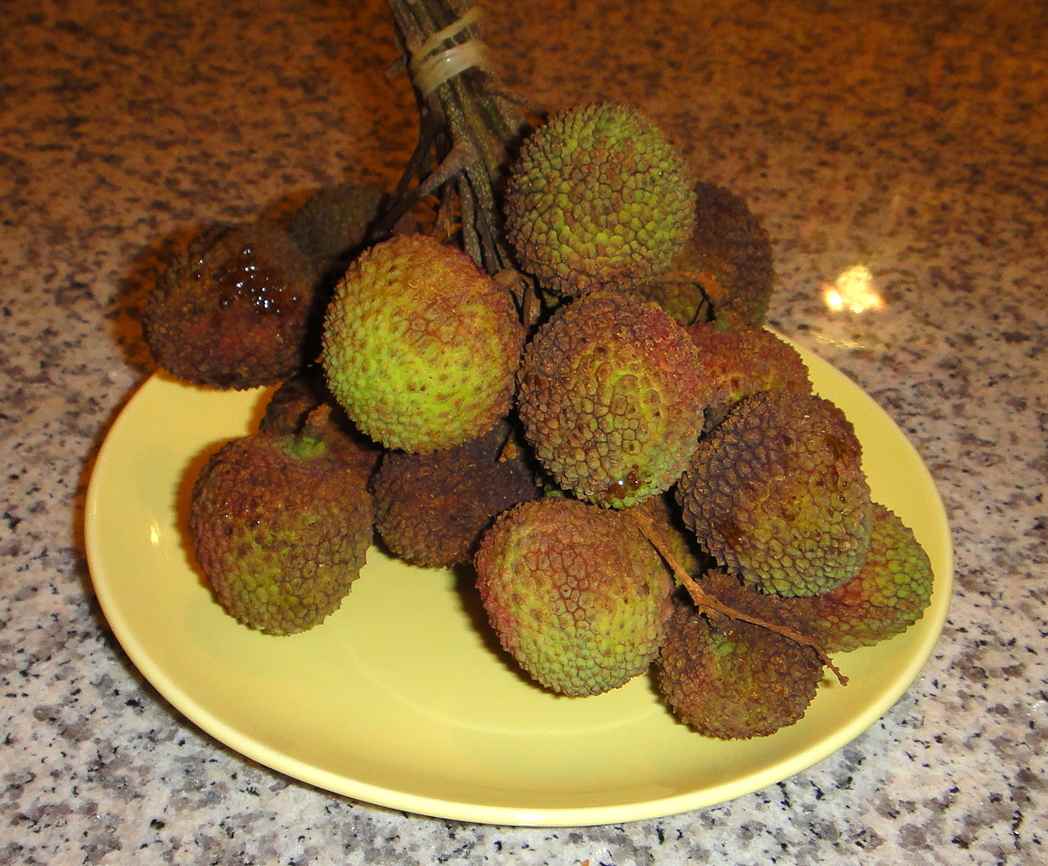 |
| Everyone in Taiwan knows what a treat is waiting in these plain-looking fruits. |
They are larger than most other lychees, and amazingly, when
you open them, the seeds are very tiny, giving you a generous quantity of extra-juicy flesh. Most people also believe
that Yu he bao have the best flavor-- they are very sweet, with a tiny sub-acid
addition that underlines the taste and gives it complexity. The season is much longer than for shu-mei. As
a rule, the first lychee to appear in May are the Yu-he-bao, and their season
can last over a month.
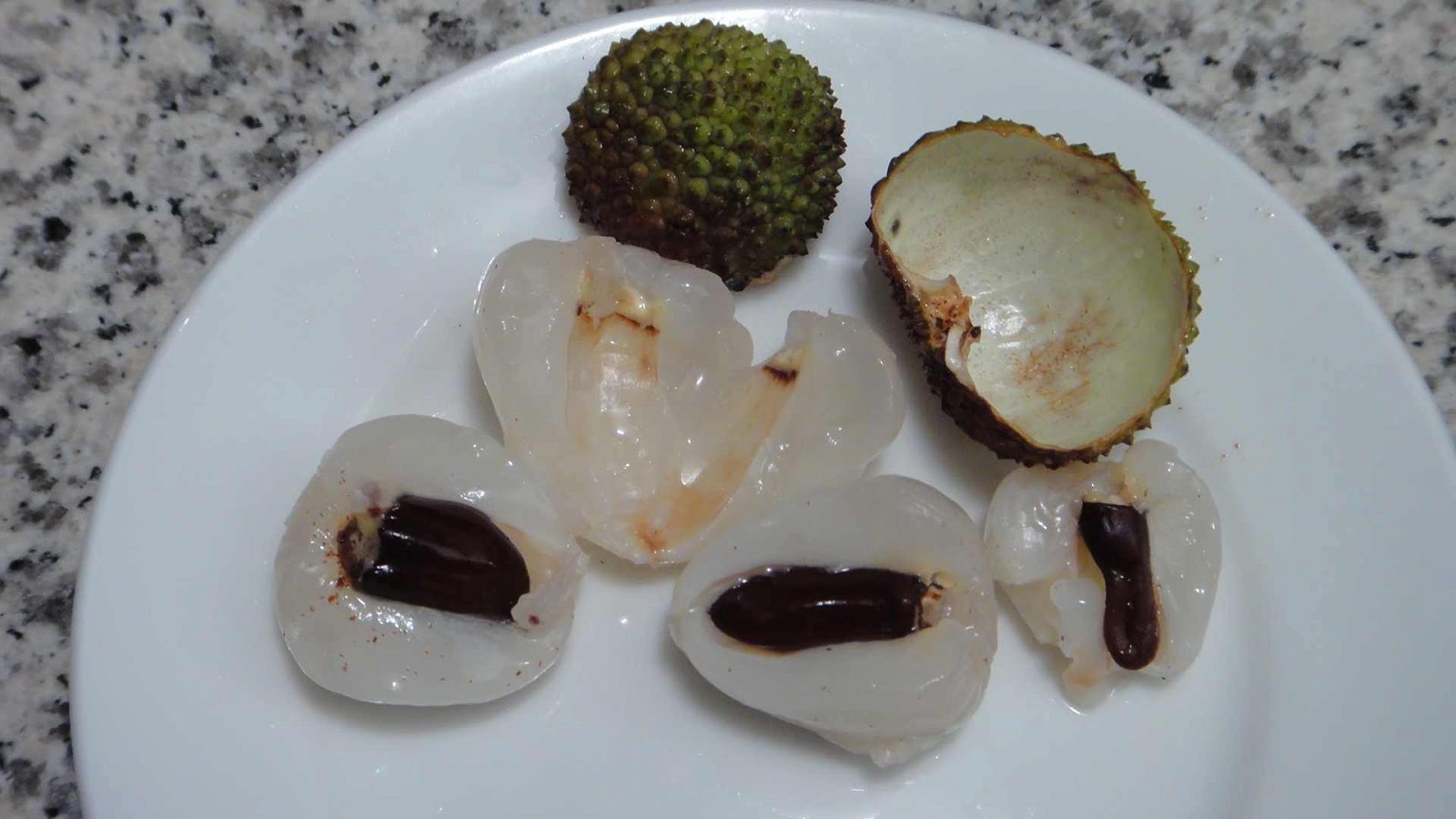 |
| The Yu-he-bao lychees cut open show their plentiful meat and small seeds. |
These fruits are a perfect example of something better
enjoyed in its native habitat. I can’t imagine that shu-mei could travel at
all, and while I have eaten lychees in America, they were only a shadow of
their luscious perfection in Taiwan, consumed within hours of their picking. In
the same vein, the crisp tartness of good fall apples, or the honeyed sweetness
of fruits like mayapples, will have to remain a closed book to those who live
in warm climates.
Taiwan has many types of exceptional produce and a plethora
of regional dishes, but when shu-mei or Yu-he-bao are available, other specialties
are forgotten, and my life suddenly centers around them. They are such a treat
that my top priority becomes getting as many as I possibly can.
 |
| A fresh package of shu mei, about to disappear. |
(All photos by the
author, except where noted.)


